
In addition to his appearance at the UN General Assembly, al-Sharaa is expected to advocate for expanded sanctions relief to support Syria’s efforts to rebuild its war-torn economy and infrastructure.
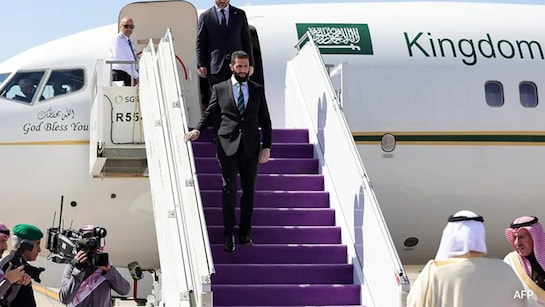
Damascus:Syrian President Ahmad al-Sharaa arrived in New York on Sunday to attend the UN General Assembly, marking the first visit by a Syrian head of state in nearly 60 years.
The last time a Syrian head of state attended the UN General Assembly was in 1967 — prior to the Assad family’s 50-year rule. That era ended in December, when then-President Bashar al-Assad was ousted in a swift insurgent offensive led by Ahmad al-Sharaa. Assad’s fall also marked the end of nearly 14 years of civil war.
Since taking power, al-Sharaa has worked to rebuild relations with Arab states and Western nations, despite initial concerns over his past associations with al-Qaida. The rebel group he once led, Hayat Tahrir al-Sham, had been designated a terrorist organization by the United States
Since taking power, al-Sharaa has promoted coexistence and aimed to reassure Syria’s minority communities. However, the country’s fragile recovery remains at risk, with sporadic outbreaks of sectarian violence. Fighters linked to the new government have also been accused of killing hundreds of civilians from the Druze and Alawite minorities.
In addition to his appearance at the UN General Assembly, al-Sharaa is expected to use the visit to advocate for additional sanctions relief, as Syria seeks to rebuild its war-ravaged economy and infrastructure.
U.S. President Donald Trump met with al-Sharaa in Saudi Arabia in May, announcing plans to lift decades-old sanctions that had been imposed during the Assad era.
He followed through by ordering the removal or suspension of a broad range of sanctions. However, the most severe restrictions—enacted under the Caesar Syria Civilian Protection Act of 2019—were imposed by Congress and can only be lifted through a congressional vote.
Negotiations are ongoing for a potential security agreement that al-Sharaa hopes will lead to an Israeli military withdrawal and a return to the 1974 disengagement accord. Although al-Sharaa stated last week that a deal could be finalized within days, Israeli Prime Minister Benjamin Netanyahu appeared to downplay the likelihood of a breakthrough in remarks on Sunday.
“There is some progress, but the deal remains a vision for the future,” he said.
Also on Sunday, Syrian election officials announced that the country’s first parliamentary elections since Assad’s fall will be held on October 5. However, members of the People’s Assembly will not be elected through a direct popular vote; instead, an electoral college system will be used, with provincial electoral bodies selecting two-thirds of the seats, while al-Sharaa will directly appoint the remaining one-third.
Officials have stated that holding direct elections at this time would be too logistically difficult, as many Syrians have lost personal documents or are living as refugees abroad following the nearly 14-year civil war.
 Harsh Kumar